 |
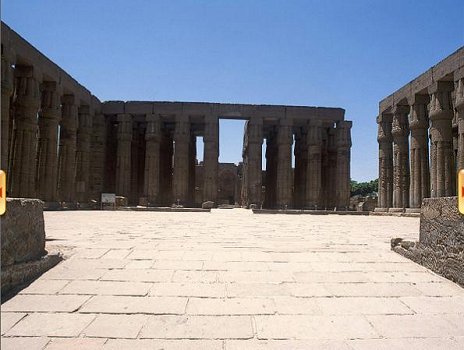
Beyond the Colonnade lies the Solar Court of Amenhotep III. It is a vast area enclosed on three sides by 64 papyrus-bundle columns. They represent bound stalks of the sacred papyrus plant capped with a cluster of papyrus buds. The architraves — those blocks that support the crosspieces connecting column to column — are inscribed with the king's shenou. This forecourt was the main gathering place for the ordinary citizens when they visited the temple to pay homage to the gods, since only Pharaoh and the priests were allowed to enter the sanctuary at the back.
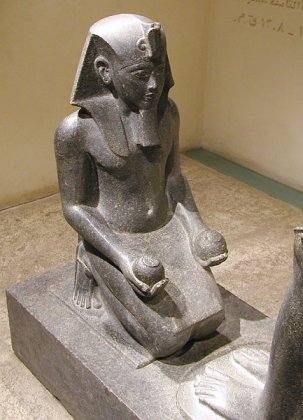 |
In 1989 a portion of the courtyard was dug up in an effort to determine why the columns and architraves were shifting — which was threatening to cause the whole structure to collapse. During the work to save Amenhotep's Courtyard, excavations revealed 26 magnificient sculptures that had been buried in antiquity. These statues had escaped the ravages of time and man and now appear almost as fresh as the day they left the artisan's studio. It is uncertain why they were buried, but nine of the most important now reside in the Luxor museum, including a rare statue of Horemheb. Until these statues were found, there were only two rather poor quality portraits of this pharaoh who oversaw Egypt as it finally did away with the Atenist schism begun by Akhenaten. Discovery of this statue represents a find of unequalled value.


